

After nearly 20 years of caring for dogs of all breeds, ages, and temperaments, one thing I’ve learned is how important it is to build comfort before leaving your dog home alone.
We love our dogs and naturally want to spend as much time with them as possible. But being with them constantly isn’t necessarily helping them develop the confidence they need to be comfortable when we’re not around.
A dog who feels secure should be able to relax, take a nap, or simply enjoy some downtime without constantly worrying about where their owner is.
For some dogs, this comes naturally. Others need a little more help learning that being alone doesn’t mean they’ve been abandoned.
And for dogs who already struggle with separation anxiety, building that confidence takes patience, consistency, and sometimes professional guidance.
Why Is It Important for Dogs to Feel Comfortable Alone?
Think about how nice it feels to have a little time to yourself. You can relax without having to talk to anyone, entertain anyone, or worry about what everyone else is doing.
Dogs benefit from quiet time, too.
I think sometimes we unintentionally teach our dogs that they need to be involved in everything we do. They follow us from room to room, sit beside us while we work, and get up every time we move.
There’s nothing wrong with having an affectionate dog who enjoys your company. But it’s also important for them to learn that they can be perfectly happy resting in another room.
Being comfortable alone doesn’t mean a dog loves their owner any less. It means they feel safe and confident even when their owner isn’t right beside them.
That confidence can make a tremendous difference in their everyday lives.
What Does Your Dog Experience When Left Home Alone?
Before trying to change your dog’s behavior, pay attention to what actually happens when you’re not there. If you’re unsure whether your dog is struggling, start with our guide to the signs of separation anxiety in dogs.
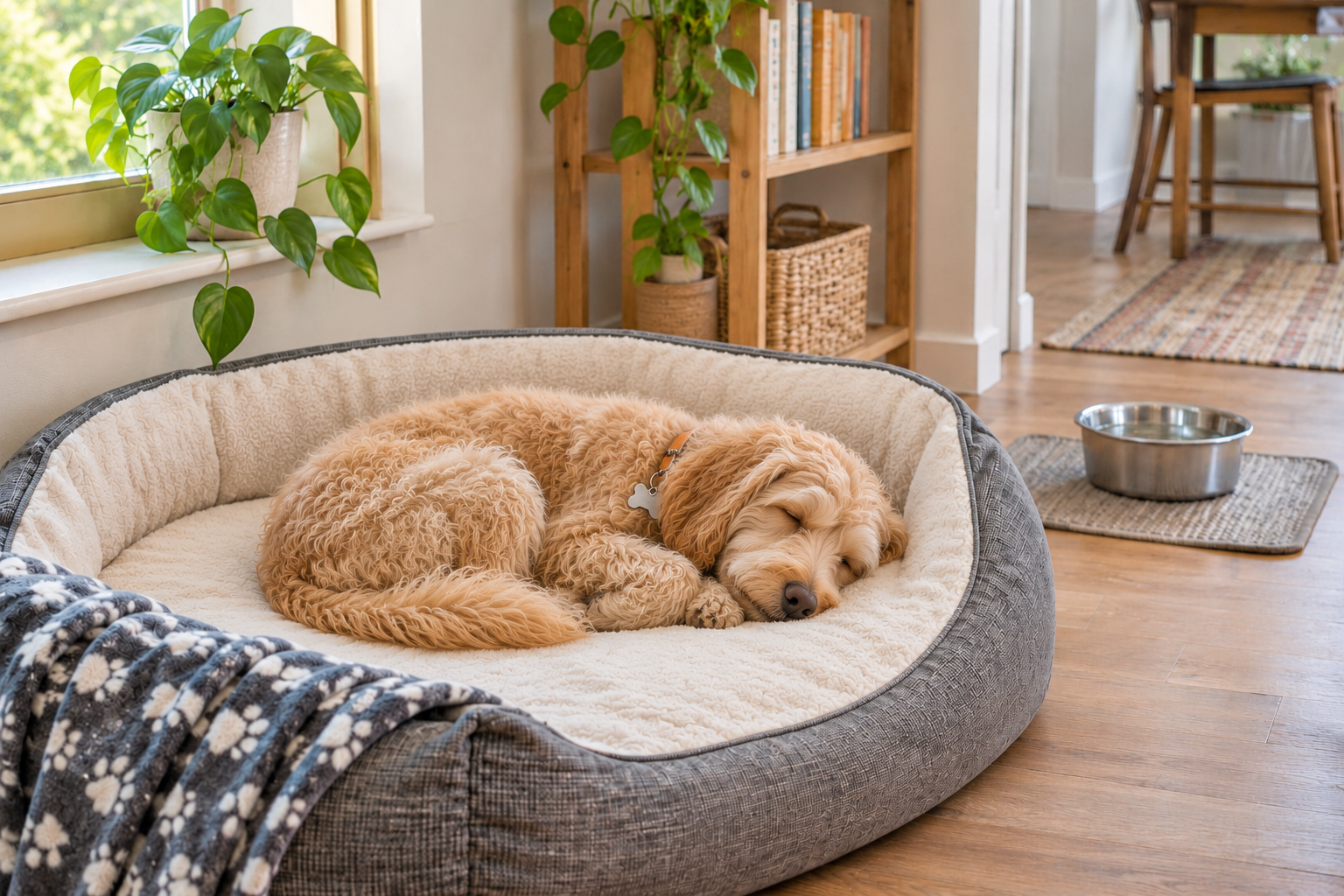
Some dogs settle down almost immediately. They find their favorite spot, curl up, and go to sleep.
Others spend their time pacing, watching the door, whining, or becoming increasingly upset.
I’ve cared for dogs who seem perfectly comfortable as long as someone is nearby but become anxious the moment that person leaves the room.
Those differences matter because every dog has a different starting point.
If you have a home camera, it can be helpful to observe your dog during an ordinary, safely managed absence. Watch whether they’re able to settle, how long it takes, and whether they seem relaxed.
If your dog is showing significant distress, don’t deliberately leave them alone longer to see whether they’ll eventually calm down. Speak with your veterinarian or a qualified behavior professional about an appropriate plan.
How Should You Set Up Your Home?
Create a comfortable place to relax
Every dog should have a safe, comfortable place where they can settle without being disturbed.
That might be a favorite dog bed in the living room, a quiet bedroom, or another familiar area of the house.
The important thing is that your dog feels comfortable there.
I also think it’s helpful to encourage dogs to use their resting spaces while you’re home, rather than only sending them there when you’re leaving.
You want that space to be somewhere they enjoy, not somewhere they associate with being left behind.
If your dog is comfortable in a crate, that may be an option. But crates aren’t appropriate for every dog, especially those who panic when confined. A dog who scratches frantically, tries to escape, or becomes distressed in a crate needs a different arrangement.
Make sure their everyday needs are met
A dog who has had an appropriate walk, a bathroom break, and some mental stimulation may find it easier to settle.
That doesn’t mean you need to exhaust your dog before leaving.
I’ve always believed that dogs benefit from a good balance of activity, socialization, and rest.
Walks give them opportunities to sniff, explore, and burn off energy. But learning to relax is just as important as learning to be active.
A tired dog isn’t necessarily a confident dog, and exercise alone won’t resolve separation anxiety.
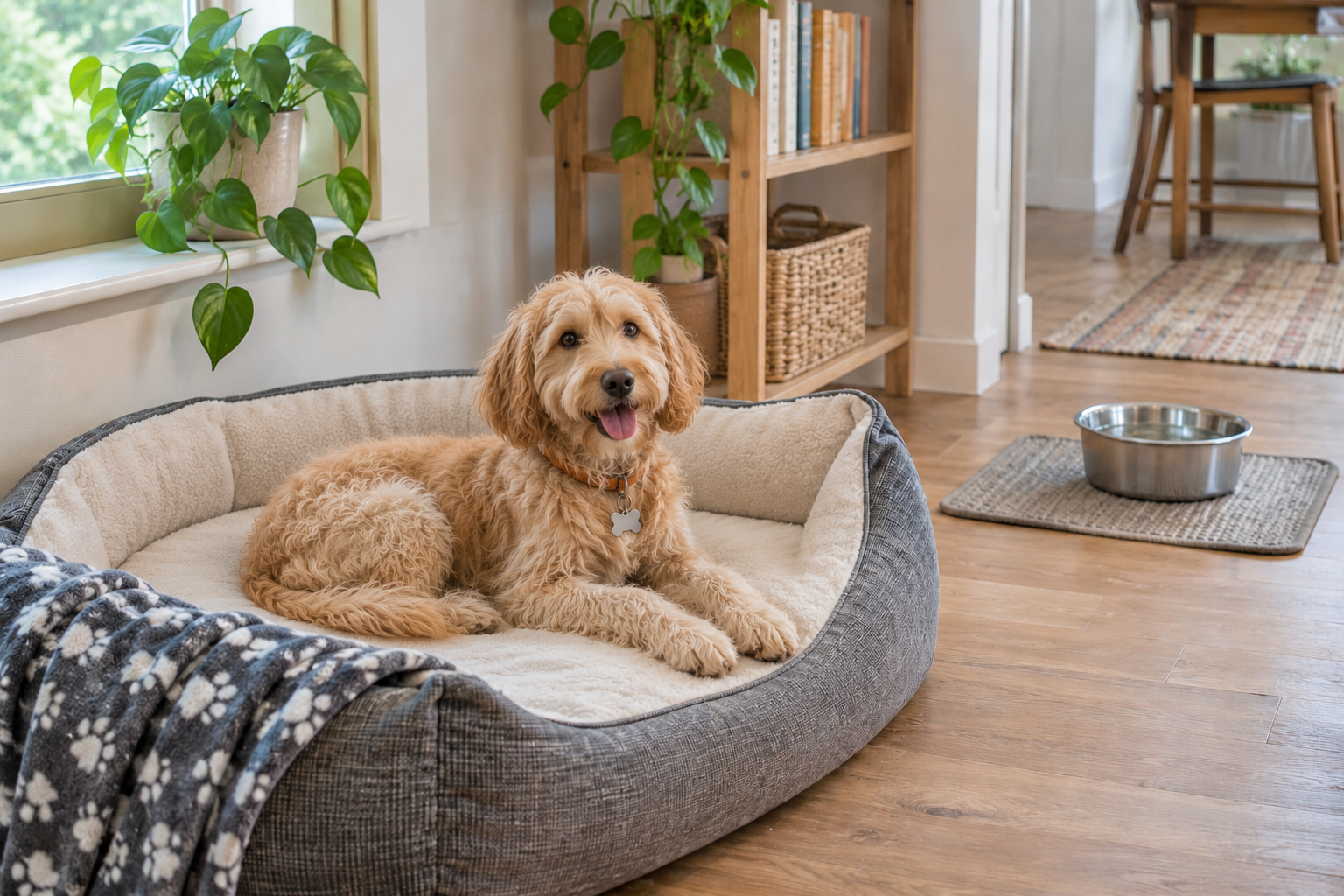
6 Gentle Ways to Help Your Dog Home Alone Build Confidence
This is something I think should start early, ideally when dogs are puppies. But older dogs can learn to become more comfortable with independence, too.
The goal is to make being apart a normal, positive part of everyday life.
Here are a few things I encourage:
- Let your dog enjoy some downtime. If your dog is comfortably resting on their bed, there’s no need to constantly call them over or engage with them. Let them relax.
- Encourage them to settle without you beside them. Start by rewarding calm behavior in a nearby resting spot. As they become comfortable, you can gradually introduce a little more distance.
- Practice very short, comfortable separations. For dogs who can handle it, briefly stepping into another room can be a starting point. Return before they become distressed, and gradually build on their success.
- Make coming and going a normal part of the day. Calm, predictable departures and arrivals can help some dogs. There’s no need to turn every goodbye into a big event.
- Be consistent. Dogs often do well with routines. Regular walks, meals, playtime, and rest help create a predictable day.
- Pay attention to your dog’s response. If your dog becomes anxious, the exercise is too difficult. Go back to something they can comfortably manage.
For dogs with established separation anxiety, even a few seconds apart may be too much. These dogs may need a professional behavior modification plan that begins with much smaller steps.
The goal is to build confidence, not force independence.
What If Your Dog Already Has Separation Anxiety?
This is where I think it’s especially important to understand the difference between teaching independence and expecting a frightened dog to simply get used to being alone.
A dog who is already panicking when their owner leaves isn’t necessarily going to improve because they’re left alone more often.
In fact, repeated stressful experiences can make the problem worse.
I’ve seen how differently dogs respond to separation, even dogs of the same breed living in similar circumstances.
Some may only need help developing a more independent routine. Others experience genuine distress and need much more support.
For those dogs, I recommend working with a veterinarian and, when appropriate, a qualified behavior professional who uses gradual, reward-based methods.
The RSPCA’s guidance on leaving dogs home alone is also a helpful resource.
There isn’t a magic number of minutes a dog should be able to handle. The starting point depends on the individual dog.
How Do You Manage Work and Other Absences While Your Dog Is Learning?
Of course, most of us can’t stay home all day while our dogs learn to become more independent.
We have jobs, errands, appointments, and other responsibilities.
That’s where having a reliable care routine can be helpful.
A midday dog walk gives your dog an opportunity to get outside, exercise, use the bathroom, and spend time with a familiar caregiver.
At Muddy Paws, our small group walks also provide opportunities for dogs who enjoy socializing to spend time with other dogs and build confidence in different environments.
I think it’s healthy for dogs to have positive experiences with people other than their owners.
But it’s important to remember that a dog walker isn’t a treatment for separation anxiety.
If your dog becomes extremely distressed the moment you leave for work, a walk several hours later won’t address the anxiety they’re experiencing during those first hours.
Some dogs may need a caregiver present for longer periods while they’re working through their anxiety.
The right arrangement depends on what your dog can comfortably manage.
If your dog is comfortable between visits but needs an outing during your workday, a midday walk can provide a bathroom break, sniffing, movement, and time with a familiar caregiver. Muddy Paws has provided dog walking and pet sitting since 2007; tell us what your dog enjoys and what makes departures difficult so we can discuss fit.
Explore our dog walking in Woburn, Winchester dog walking, and Stoneham dog walking pages, or check our service area for nearby communities.
How Do You Know Your Dog Is Becoming More Comfortable?
One of the best signs of progress is a dog who can genuinely relax.
Not just a dog who has stopped barking, but one who can settle down, rest, and go about their normal routine without constantly worrying about where you are.
Look for things like:
- Choosing to rest independently
- Remaining relaxed when you move around the house
- Settling comfortably during brief, manageable separations
- Showing less pacing, panting, or other signs of stress
- Returning to normal activities after ordinary household noises
Progress doesn’t always happen in a straight line.
Some days will be easier than others. Changes in routine, illness, visitors, or unfamiliar noises can affect how a dog responds.
What matters is that you’re helping your dog become more comfortable at a pace they can handle.
Why I Believe a Confident Dog Is a Happier Dog
After nearly 20 years in the pet care business, I’ve worked with dogs who are incredibly independent and others who want to be attached to someone every second of the day.
And while I love affectionate dogs, I also think there’s something wonderful about a dog who is perfectly content doing their own thing.
They can enjoy a walk, play with other dogs, spend time with their favorite people, and then find a comfortable spot to relax.
They don’t feel like they need to be involved in every activity or follow every movement.
They can just be.
That’s the kind of balance I think we should be helping our dogs develop.
We want our dogs to love spending time with us, but we also want them to feel safe and happy when we’re not there.
A dog who can comfortably spend time alone has a valuable life skill, and that can make everyday life much easier for both the dog and their family.
Frequently Asked Questions
How long should I leave my dog alone when first practicing?
There’s no universal starting time. Some dogs can comfortably handle a few minutes, while others may become anxious when you simply walk toward the door. Start with what your dog can manage without distress and gradually build from there.
Should I wait until my dog stops crying before returning?
No. If your dog is becoming distressed, don’t prolong the separation to force them to stop crying. Help them feel safe and adjust your approach so the next practice is easier.
Can toys or treats help my dog feel comfortable alone?
For some dogs, food puzzles, safe chew toys, or other enrichment can help make quiet time enjoyable. However, a dog experiencing significant separation anxiety may be too stressed to eat or play. Toys alone won’t resolve the underlying problem.
Is it okay to leave my dog in a crate?
A crate can be appropriate for a dog who is already comfortable and relaxed in one. But if your dog panics, scratches, or attempts to escape, confinement can increase distress and create a risk of injury.
Should I increase the time my dog is alone every day?
Not necessarily. Progress should depend on your dog’s comfort rather than following a strict schedule. Some days you may need to repeat an easier step or shorten the separation.
Can regular dog walks help my dog become more confident?
Regular walks provide exercise, mental stimulation, and opportunities to explore new environments. For dogs who enjoy group walks, spending time with other dogs and familiar walkers can also provide positive social experiences. However, separation anxiety requires its own individualized approach.
Concerned about your dog’s workday routine? Tell us what you’re noticing, how long your dog is alone, and which days you need help. Contact Muddy Paws to discuss whether midday walks would be a good fit and ask about current availability.
